

For over a decade, the Paid-Owned-Earned (POE) model has provided the structural clarity marketers crave. Paid advertising buys reach, owned channels build audiences, and earned media validates credibility.
As a marketing professor, I've used this framework for years precisely because it offers students clear definitional boundaries and a structured approach to understanding media types. Research confirms its pedagogical value for improving analysis and concept development.
But with the emergence of TikTok, Instagram Reels, and YouTube Shorts, the dynamics that made POE effective have fundamentally changed.
In his keynote at the 2025 POSSIBLE Conference, Gary Vaynerchuk argued that the traditional POE model is effectively "broken" in an algorithmic age. We've moved from the "social media era" (where reach depended on your follower count) to the "interest media era" (where platforms prioritise content relevance over social connections).
For the first time in marketing history, "creative creates reach" based on resonance, not just paid distribution.
While his assertions often draw scepticism from academic circles, his diagnosis aligns with emerging empirical research: algorithmic curation has fundamentally restructured media distribution.
A 2025 systematic literature review in Work, Employment and Society confirms that "algorithms regulate visibility" and shape how online communities form and behave. In other words, social platforms are no longer neutral distribution channels centred around your connections, but systems that surface content based on relevance.
And the platforms didn't just change what you see in newsfeeds. They changed the economics of attention, making algorithmic validation a prerequisite for efficient media spend.
The Interest Graph vs. The Social Graph
To understand why this shift is structural, not just trendy, we need to look at the underlying mechanism of distribution: the move from social graphs to interest graphs.
The social graph (Facebook's original model) prioritised connections. You saw content from people you followed. Reach required building an audience first, hence why "Paid" came first in POE. You bought ads to build followers, then leveraged those owned connections to generate earned engagement.
The interest graph works differently. Platforms like TikTok, Instagram Reels, and YouTube Shorts use recommendation algorithms that prioritise content relevance over follower relationships.
A 2022 empirical study tested this directly using controlled TikTok personas. Researchers found that whilst the follow-feature influences recommendations the most strongly, video view rate (a signal of content resonance) also impacts algorithmic distribution.
In other words: the algorithm tests whether people watch your content, and if they do, it distributes it further, regardless of whether they follow you.
This creates what Brookings Institution researchers describe as "the world's most sophisticated content testing mechanism." Organic distribution becomes a way of testing what works.
Why Organic-First Changes Everything
There is a growing body of research that supports this reordering. Here are two studies worth noting.
A 2020 study in Management Science showed that when curation algorithms are introduced, users become less selective about whom they follow because the algorithm does the filtering work. This changes content economics fundamentally: brands no longer need massive follower bases first. They can reach audiences through algorithmic curation if content resonates.
A 2021 peer-reviewed study analysing 1,025 Facebook posts reinforced this finding from a different angle. Researchers found that "nonpaid (organic) reach is associated with higher engagement than paid reach" because organic posts generate interactions (comments and shares) that carry more weight in algorithmic distribution.
The implication is clear: organic distribution doesn't just validate content, it generates higher-quality engagement signals that algorithms reward with further distribution.
This validates Vaynerchuk's point: "There is zero reason to spend media dollars amplifying any piece of creative that has not been affirmed organically on social in 2025."
If organic performance predicts amplification success and generates better engagement, testing organically first isn't just cheaper. It's strategically smarter.
This is where the shift from POE to OEP happens. Companies validate content resonance first (owned content → earned algorithmic distribution → paid amplification of what already works).
From POE to OEP: The Operational Shift
The sequence matters operationally. The common pattern among successful implementations is that massive organic reach preceded paid amplification. Once a brand had content that resonated strongly enough for algorithms to distribute it at scale organically, they amplified those validated assets with paid spend.
The strategic implication: content validation should precede budget allocation.
In the POE model, brands allocated paid budgets upfront based on creative instinct or historical performance. In the OEP model, brands let algorithmic distribution validate content first, then allocate paid budgets to amplify what already demonstrates resonance.
Here are three ways to operationalise this shift:
1. Reframe Owned Media as Your Testing Lab
Your owned social channels are no longer just brand touchpoints. They're algorithmic testing grounds.
Instead of publishing only meticulously crafted assets, adopt a higher-volume, test-and-learn approach. Algorithms distribute content that resonates and suppress content that doesn't. Low-performing content simply won't reach audiences at scale, reducing the cost of failure.
This requires two shifts. First, resource reallocation toward content production teams rather than concentrating budgets in media buying upfront. Second, and often more challenging, cultural and governance shifts toward looser content publication policies. Many brands remain constrained by rigid approval processes designed for an era when every published asset carried significant media spend. Those guidelines made sense when distribution was expensive. They become counterproductive when algorithmic curation offers free testing infrastructure.
2. Shift Success Metrics from Paid-First to Earned-First
Traditional POE metrics focus on paid media efficiency: cost per thousand impressions (CPM), cost per click (CPC), follower growth rate.
OEP metrics track organic validation signals: video view rates, shares-to-reach ratios, comment engagement, and watch time completion rates. The key measurement is algorithmic distribution velocity, how quickly your content gets distributed beyond your immediate followers.
MIT Sloan professor Sinan Aral calls this the "hype loop": the feedback mechanism between content and algorithmic response. When you enter that positive feedback loop, paid amplification makes strategic sense. You're scaling what algorithms already validated, not hoping paid reach compensates for weak creative.
3. Sequence Budget Allocation After Validation
This doesn't mean eliminating paid media. It means resequencing when paid budgets deploy.
In POE thinking, paid budgets are allocated upfront, typically based on a monthly publishing calendar. In OEP thinking, paid budgets amplify assets that have already demonstrated organic resonance.
Operationally, this means reserving a larger percentage of paid social budgets to amplify validated organic assets once the results are in.
The Framework Shift Is About Sequence, Not Channel Abandonment
The three media types (paid, owned, earned) still matter. What changed is the sequence that maximises effectiveness.
In the social graph era, paid came first because reach required audience infrastructure. In the interest graph era, owned content can achieve earned algorithmic distribution if it resonates, making organic validation the strategic starting point.
Paid amplification becomes the final step: scaling what already works rather than hoping ads compensate for weak creative.
The OEP sequencing is fundamentally about letting algorithms do what they're designed to do: identify resonant content and distribute it at scale. Brands that structure their operations around OEP leverage that mechanism strategically. Brands still operating on POE assumptions fight against it.
The shift isn't about abandoning paid media. It's about sequencing it after the algorithm has already told you what works.
What's your experience with organic reach on interest-based platforms?
Have you found content that performed unexpectedly well organically, and if so, did you amplify it with paid spend?
Share your approach in the comments.
And if you want more research-backed, practical marketing insights, you can subscribe to my newsletter. That's where I break down academic research, relevant reports, and emerging shifts, then translate them into insights you can actually use.
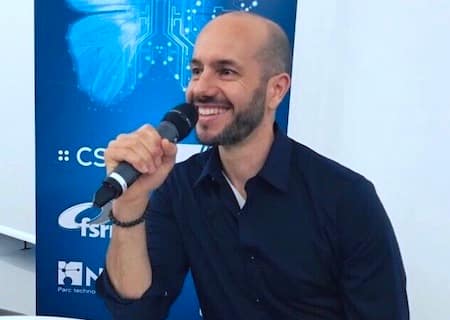
Marc Lounis
Sources
- Vaynerchuk, G. (2025). Keynote at POSSIBLE Conference. Video
- Work, Employment and Society (2025). Systematic literature review on algorithmic visibility. Link
- Boeker and Urman (2022). TikTok recommendation algorithm study. ACM Conference. Link
- Management Science (2020). Algorithm introduction and user selectivity. Link
- PMC (2021). Organic vs. paid reach engagement analysis. Link
- Aral, S. MIT Sloan Management Review on algorithmic feedback loops. Link
- Journal of Marketing Education (2023). POE framework pedagogical value. Link